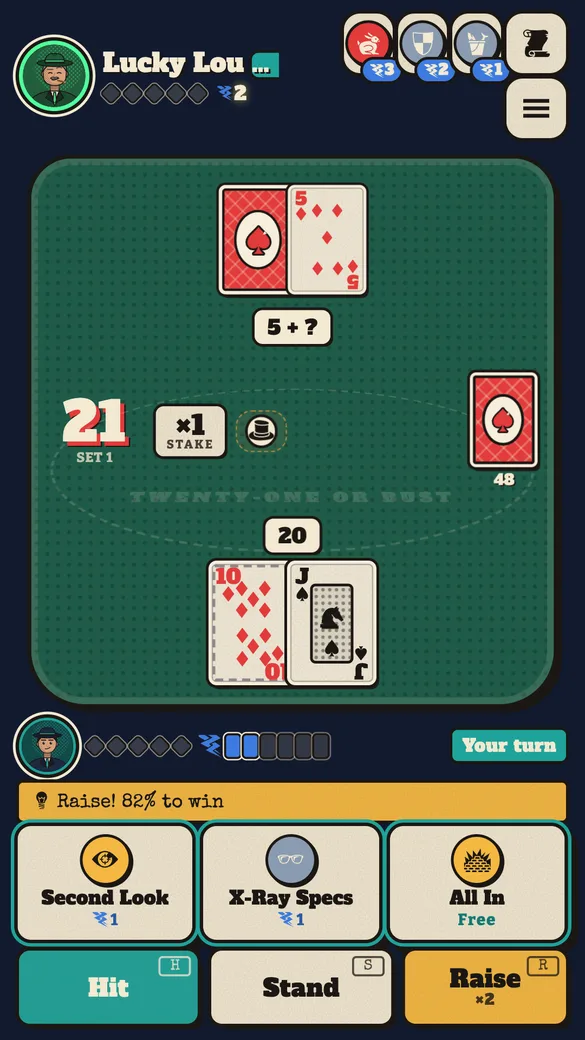
A blackjack roguelike. Twenty-one, head to head: one hidden card, one face up, closest without going over wins.
Then the rules start bending.
Works on phones, tablets and computers. Android, iPhone and Steam versions come later: get told when.

A blackjack roguelike. Twenty-one, head to head: one hidden card, one face up, closest without going over wins.
Then the rules start bending.
Works on phones, tablets and computers. Android, iPhone and Steam versions come later: get told when.
You against a rival, not the house. Win five sets, or three in a row, to take the match. The rules.
Peek at the next card, swap hidden cards, move the target. 67 of them in five tiers, from common to legendary; bring three to every table. See them all.
A card sharp's marks, for good: an ace that counts as anything, a king that hits for one. All 46 marks.
Raise, call or fold. Every rival has tells, and your notebook learns them. The game keeps a file on you too: where you stand, when you bluff, how long a hard hand takes you. The sharpest rivals have read it.
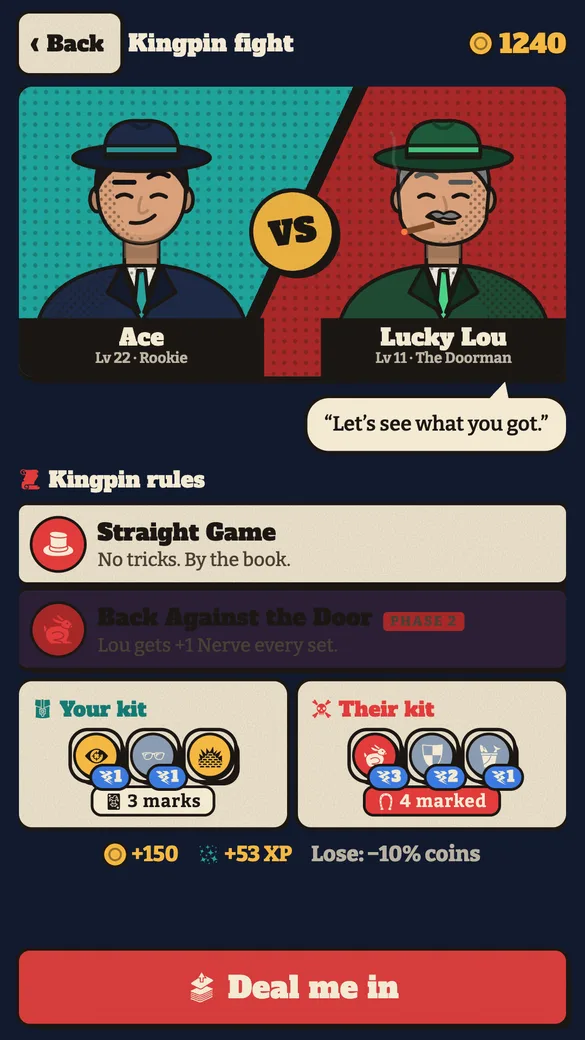
Halcyon City is a paper diorama: districts you walk street by street, each with its regulars, its house rules and a kingpin who rewrites them mid-match. Every hand is dealt under one lamp, with your rival across the felt as a jointed paper puppet. Three chapters and nine kingpins are open in the browser. The story.
Beat your first kingpin and the keys to the Last Hand are yours. Hire rivals you've beaten as dealers, set the house rules, pick the stakes and empty the till. Open your doors, and other players drop in to play your ghost: a dealer built from your file, who plays the way you do. Theirs are open to you, online or not.
One run, three hearts: how far can you get? A map for every floor, charms and Heat, plus one run a day that's the same for everyone. How RogueJack works.
Online, everyone starts even: draft two powerups, play a random marked deck from one shared shoe. Casual or ranked, a friend's table from a link, a tournament of up to 128, or one phone passed across the sofa. Multiplayer.
Coins buy boxes of powerups and marked cards, with the odds on the label. Coins are only won at the table: nothing here costs money.
An original noir jazz score, twelve songs built on one six-note figure. The band follows the match: it hangs back on the opening set, leans in at match point, and goes quiet while you think over a hard hand.
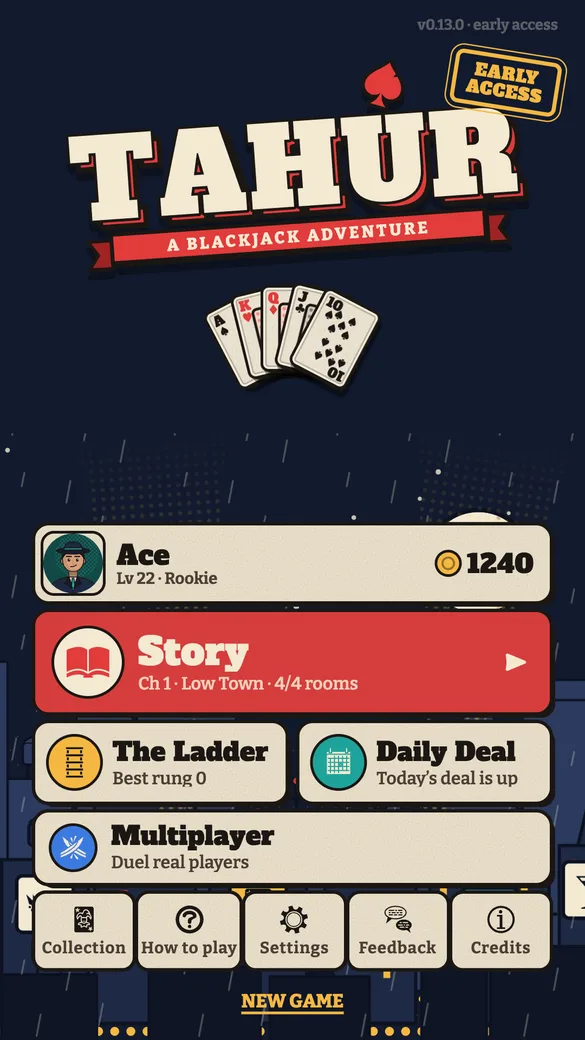
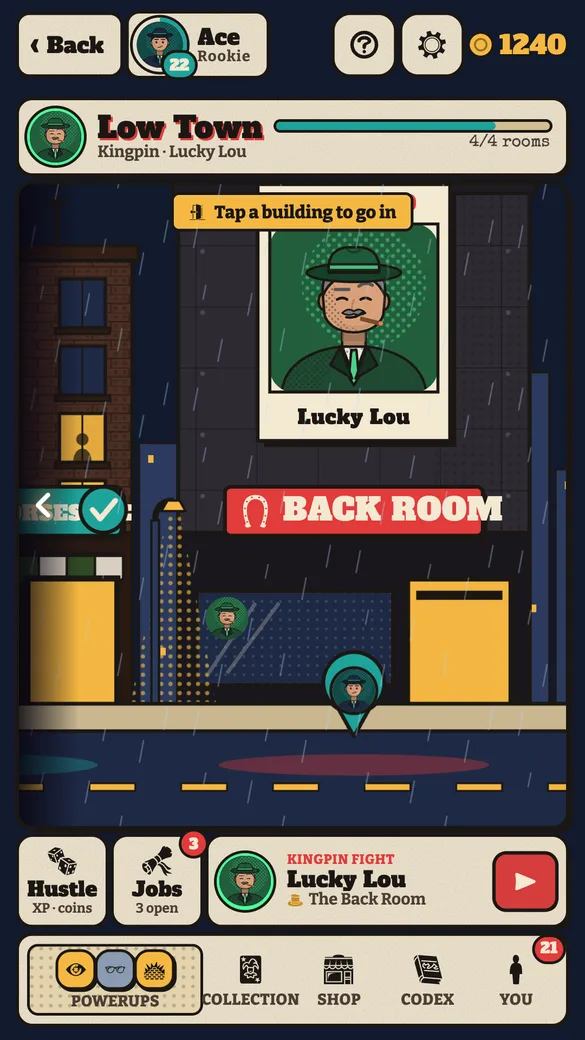
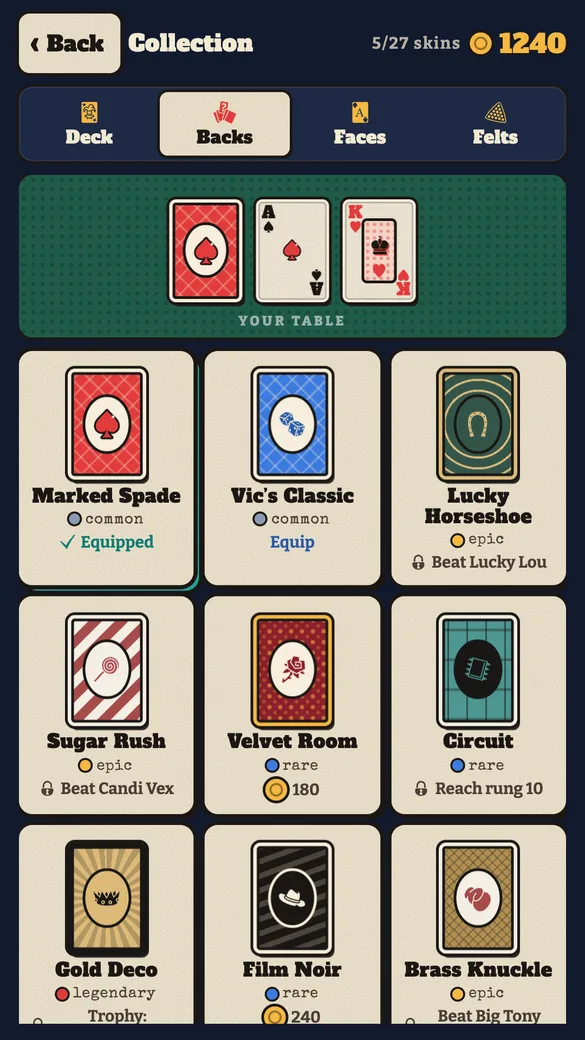
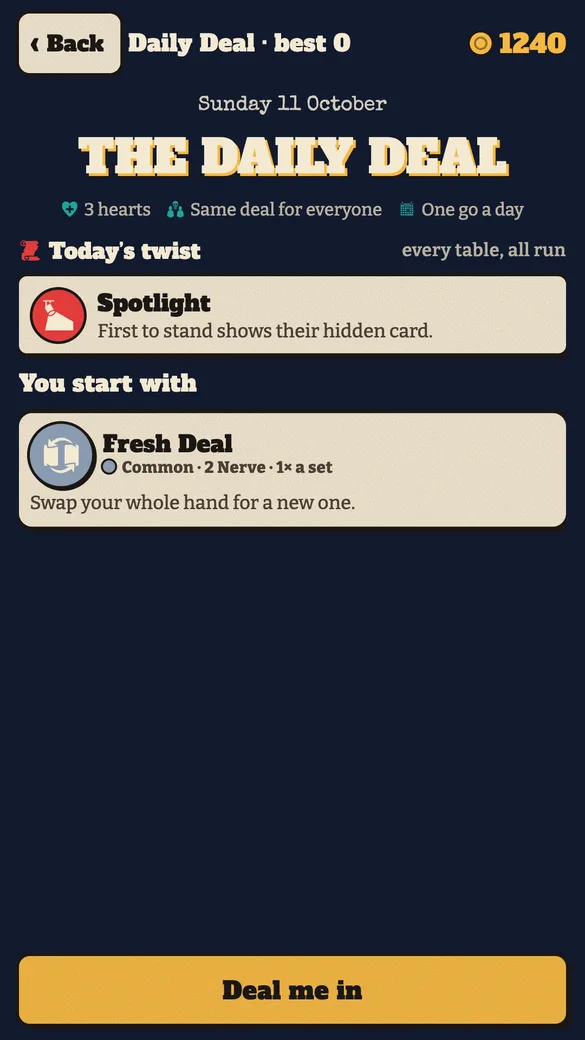
Tahúr is being built in the open: designed by one person and built with AI (Claude, by Anthropic), which writes the code, draws the art and composes the music, all in code. All five chapters are written: the browser game is the first three, and the full game adds the last two and the ending. What you say shapes what comes next.
Bugs, ideas, requests: in the game, Settings → Send feedback, or on the feedback page. Every message gets read. What's changed lately is on the updates page.
Android, iPhone and Steam versions are coming, with the same save. Leave your email and you'll get one message when yours is out. Nothing else, and you can leave any time.
One person + AI